

OMNI OR DIE: THE NEW SURVIVAL GUIDE FOR CPG BRANDS
Consumers now encounter up to 10,000 brand messages every day - from digital ads to influencer content to packaging and in-store displays. In a marketplace where attention is fragmented, fleeting, and fiercely contested, most brands receive only milliseconds of consideration.
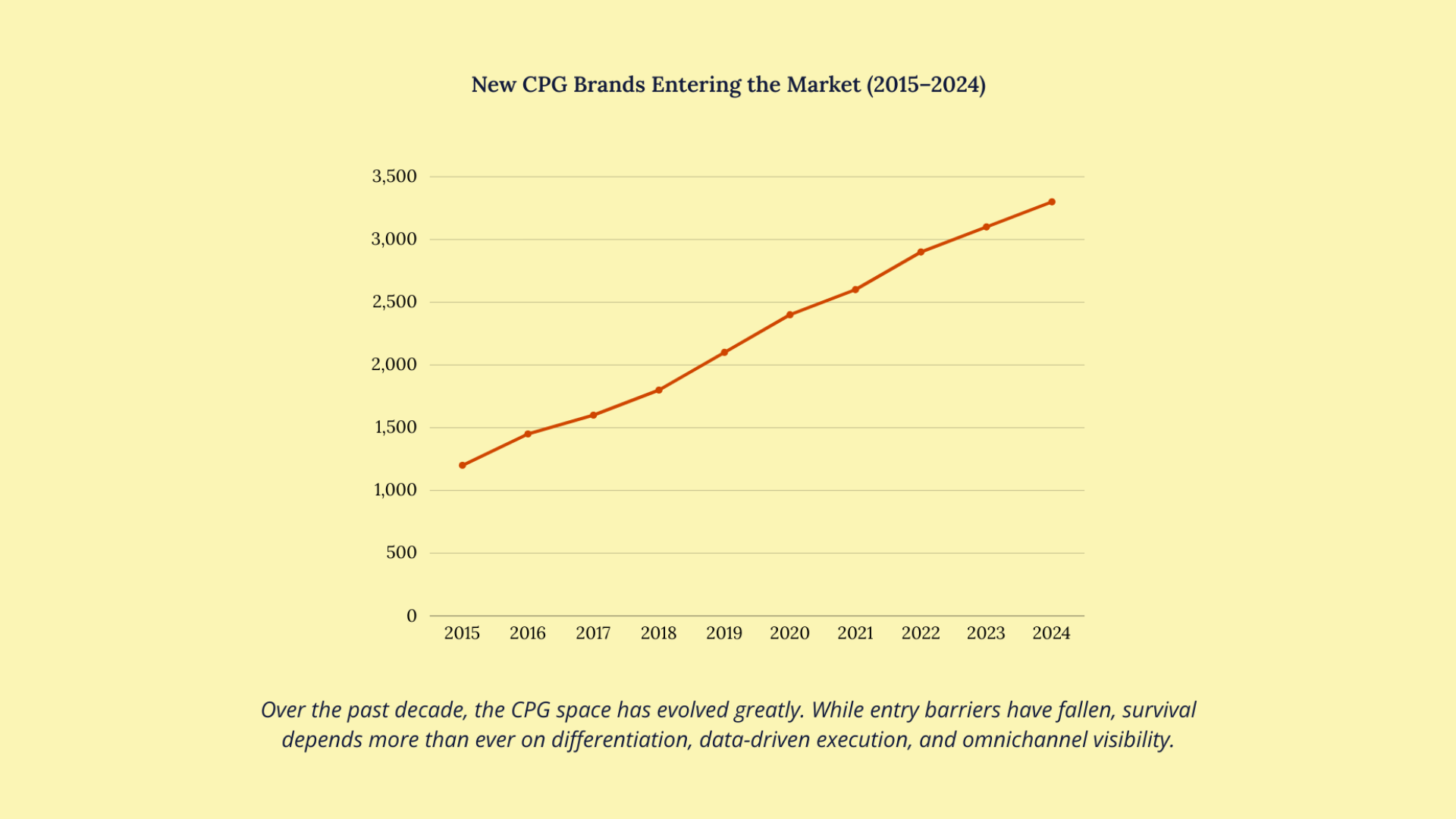
The question is no longer “Is my product good?”
It’s “Does my brand stay relevant, resonant, and buzzworthy where modern consumers live, decide, and identify?”
For today’s CPG brands, success requires an understanding that the consumer journey is continuous, nonlinear, and emotionally driven. The brands that thrive are those that achieve omnipresence, operating consistently across cultural, community, retail, and digital touchpoints.
Cultural Relevance
Why Culture Is the New Distribution Channel
In 2025 and beyond, culture is the algorithm. Consumers, especially Gen Z and younger Millennials, no longer see brands as transactional entities.
They see them as reflections of identity, values, and worldview. Culture determines which brands feel aspirational and which feel outdated.
A culturally fluent brand doesn’t simply observe trends, instead it participates in them, shapes them, and aligns with the emotional undercurrents of the moment.
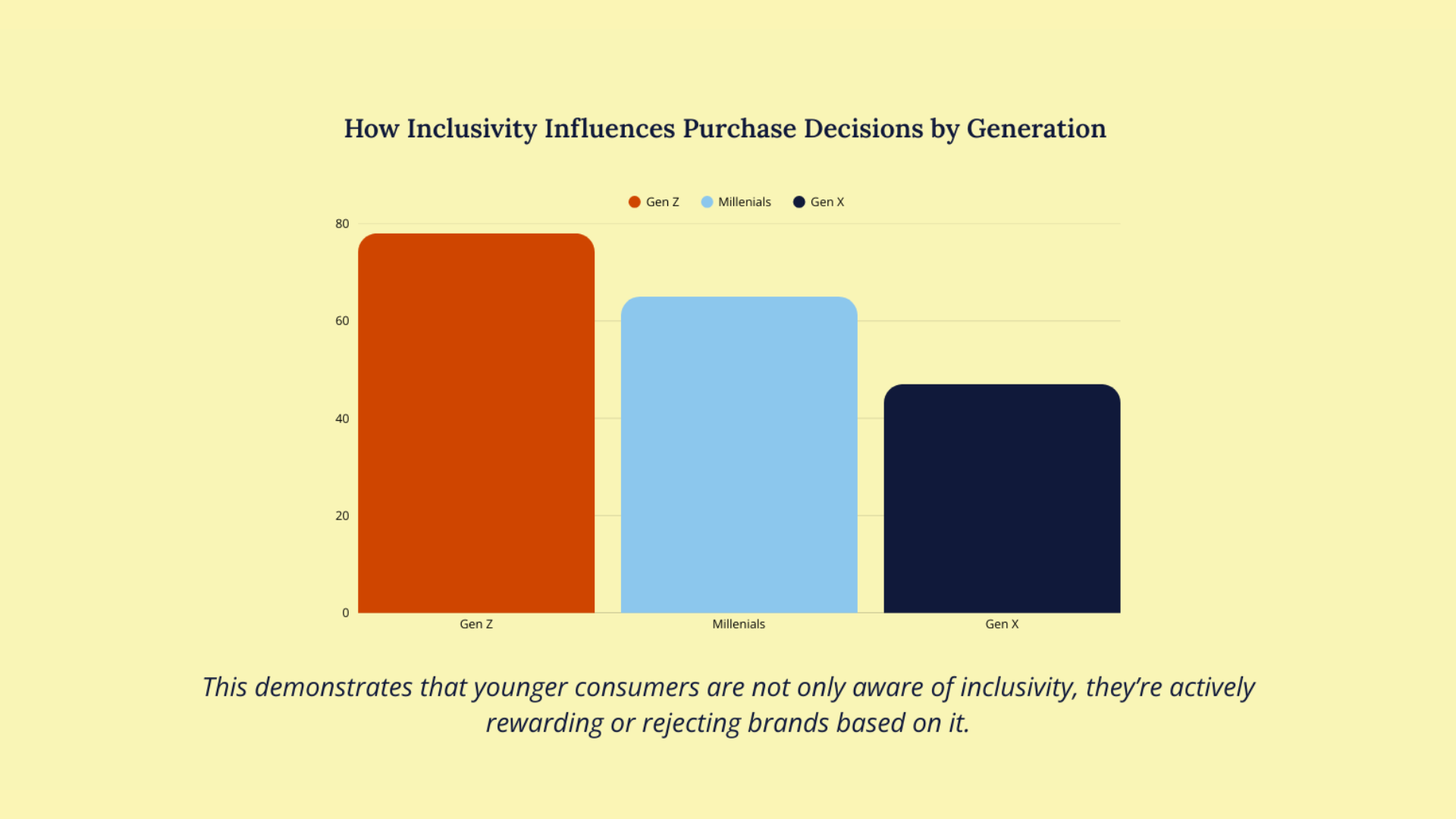
70% of global consumers say they are more likely to buy from brands that reflect their cultural identity or beliefs (Deloitte, 2023).
Brands with strong cultural alignment experience 2–4x higher engagement and 1.6x faster organic growth (Accenture, 2024).
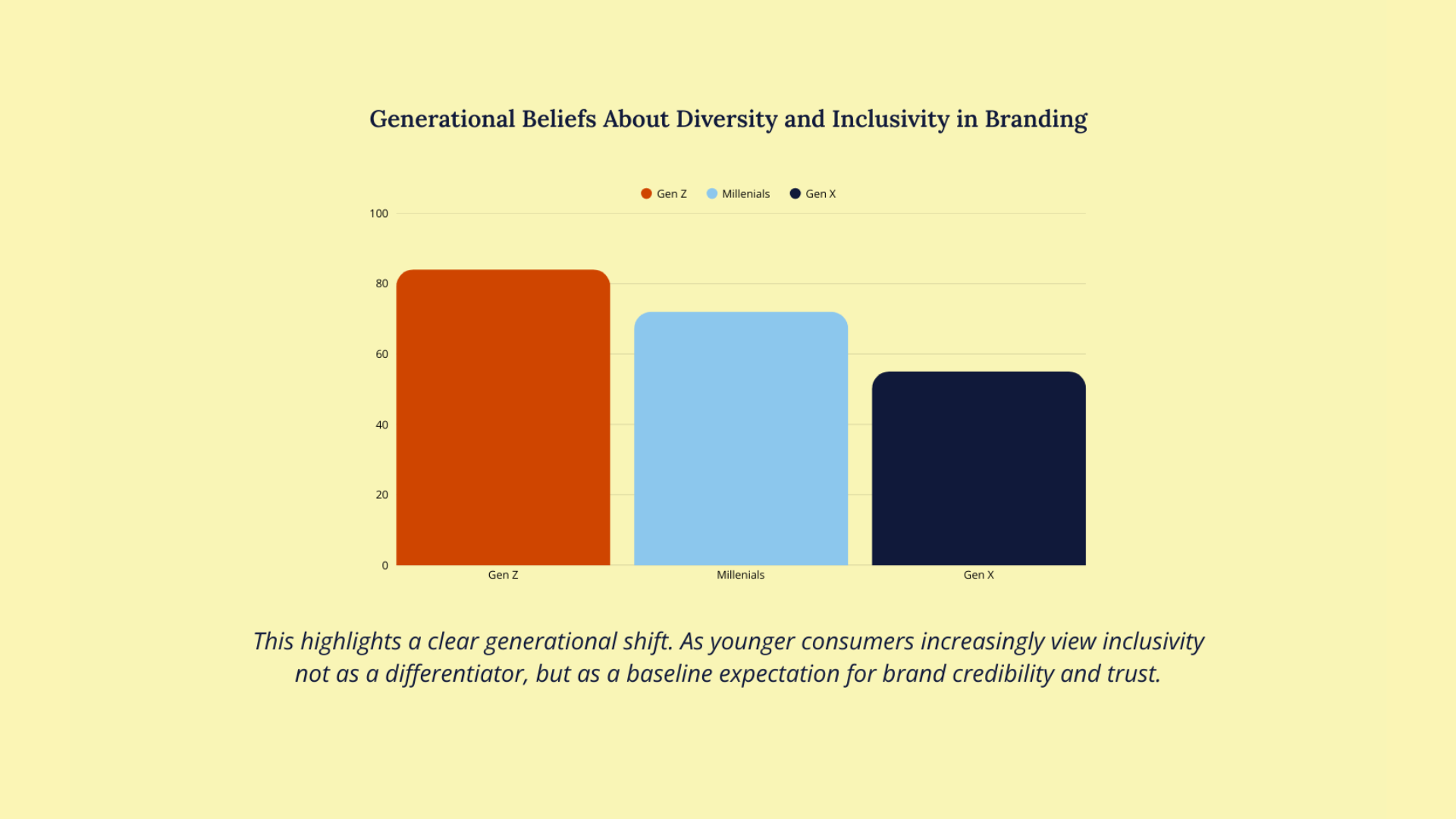
84% of Gen Z believe brands should represent diversity and inclusivity across their marketing and product storytelling (McKinsey, 2024).
Culture-led campaigns outperform traditional ads in brand recall by 32% (NielsenIQ, 2024).
How to Build Cultural Relevance
Listen first. Conduct cultural listening, not just social listening, to track conversations about belonging, aspiration, and identity.
Localize globally. Create campaigns that can flex regionally (e.g., holiday-inspired limited editions, local partnerships, or culinary crossovers).
Show (not tell) values. Demonstrate authenticity through actions (supplier diversity,
sustainability, ingredient sourcing), not slogans.
Collaborate smartly. Partner with creators, not just influencers - people who hold cultural capital in music, food, sports, or fashion.
Culturally fluent brands don’t chase trends; they create them. When a brand becomes a symbol of culture, it stops needing to sell. Consumers sell it for you.
Community Activation
Building a Brand Tribe: A New Marketing Strategy
The most successful CPG brands no longer rely on campaigns. They build communities that amplify their mission and sustain momentum between product launches. Consumers today don’t just want to buy; they want to belong. A strong brand community creates a flywheel of advocacy, driving organic awareness, loyalty, and word-of-mouth velocity.
88% of Gen Z expect brands to help them express their individuality (McKinsey, 2024).
Brands with thriving communities experience 3x higher customer lifetime
value (Harvard Business Review, 2024).
90% of CPG trial and adoption now comes from peer recommendations and reviews,
not paid ads (NielsenIQ, 2024).
Community-driven brands see 2.4x higher repeat purchase rates compared to non-
community brands (IRI, 2024).
How to Activate Community
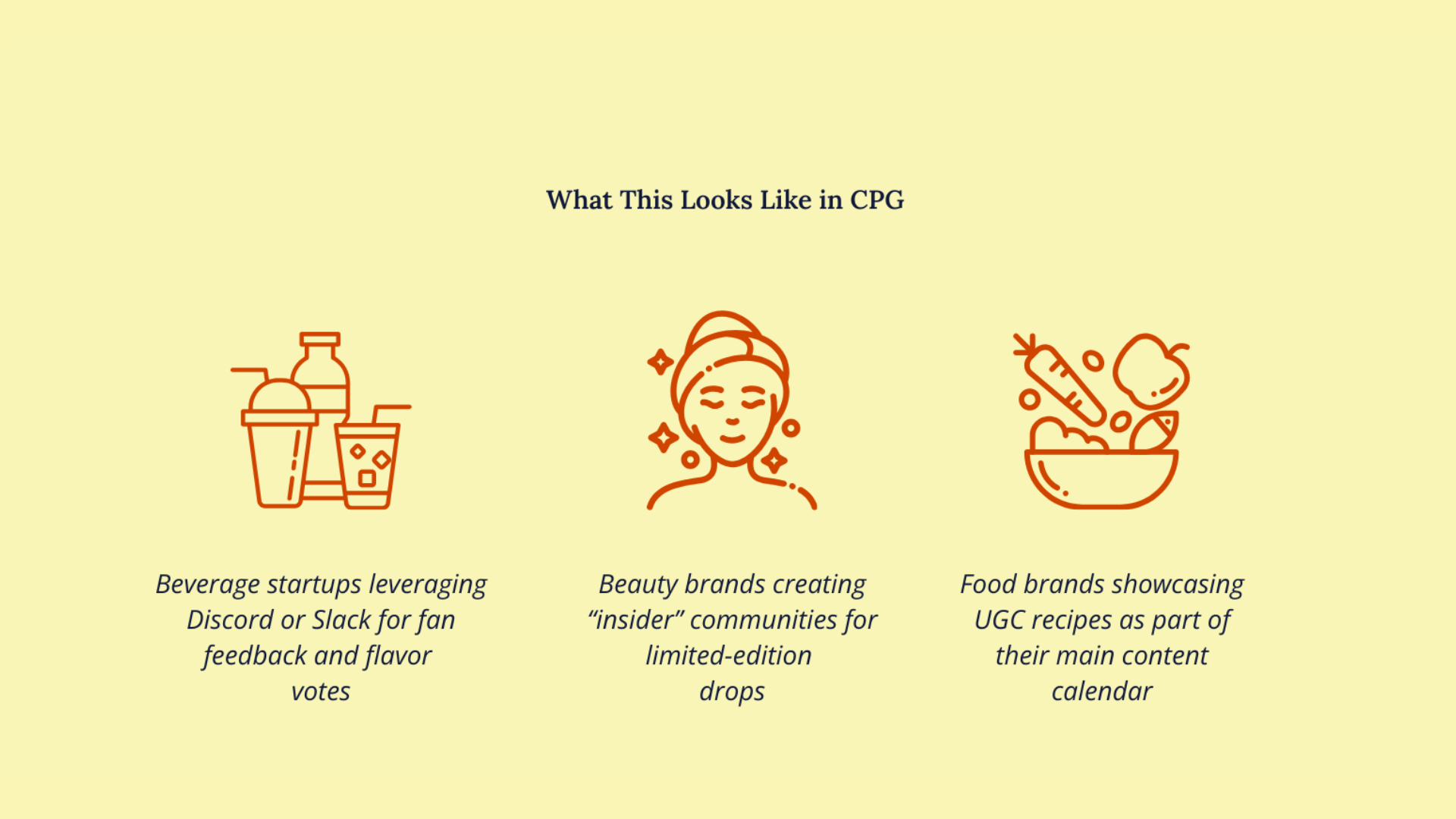
Create two-way conversations. Move beyond one-directional communication by inviting feedback, co-creation, and dialogue.
Empower ambassadors. Micro-creators and superfans drive authenticity. Equip them with content and early access.
Host hybrid experiences. Blend digital and physical activations (pop-ups, workshops, tasting tours, livestreams).
Foster shared language. Use consistent visual and verbal cues, inside jokes, mantras, and rituals that define the “in-group.”
Brands don’t grow because they talk louder; they grow because their community carries their message. The future belongs to brands that act like movements.
Retail Execution
Why Retail Is Now a Performance Channel
In CPG, placement is an achievement but sell-through is the victory. Shelf presence without shopper engagement is wasted potential. Retailers care less about your narrative and more about velocity, repeat purchase, and category incrementality. For emerging brands, the path to survival is clear: treat retail as a data-rich performance channel, not a static distribution point.
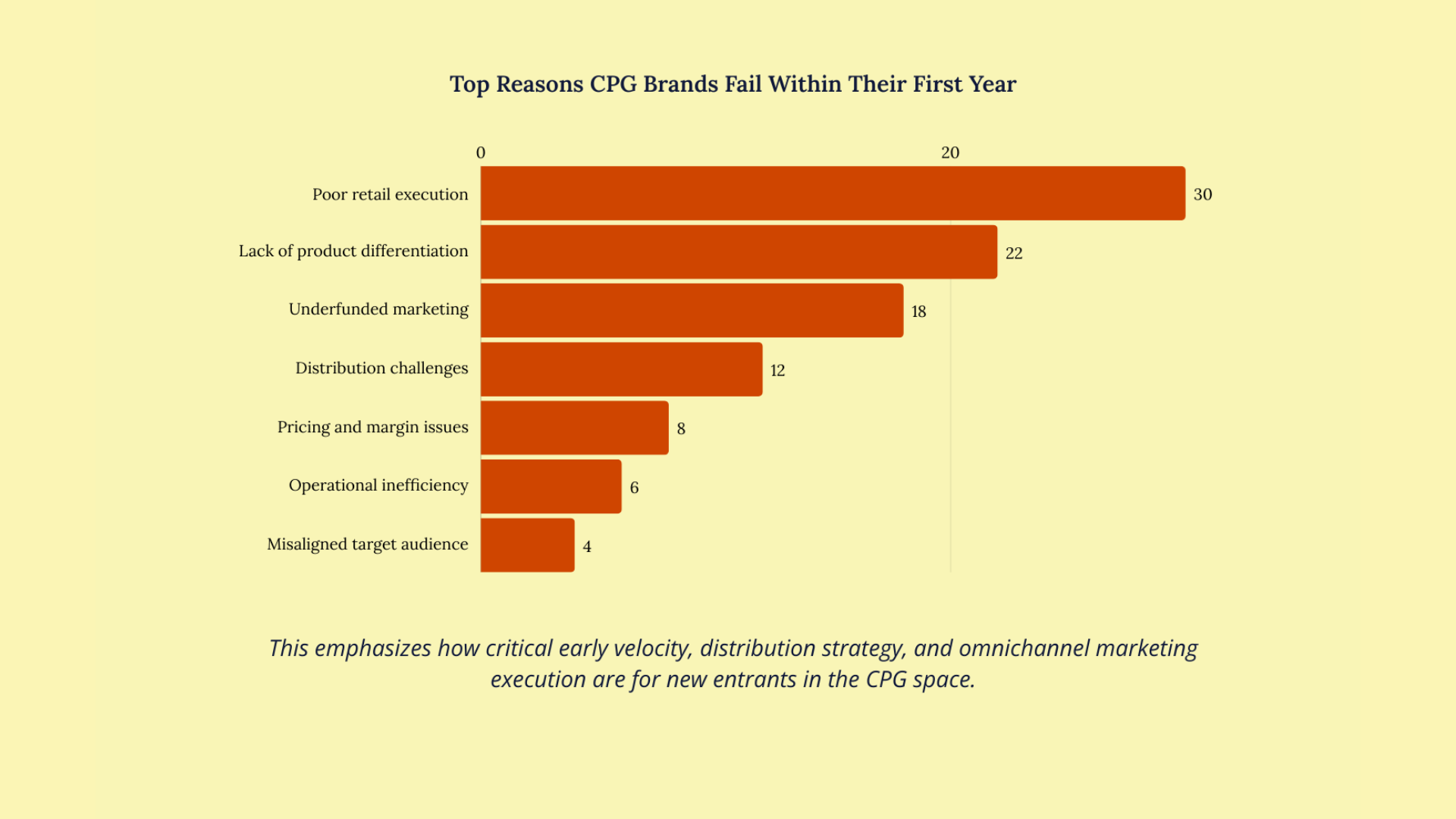
Brands missing velocity in their first 12 weeks are 70% more likely to be discontinued (IRI/NielsenIQ, 2024).
30–40% of new product launches fail due to poor retail execution (NielsenIQ, 2024).
Digital shelf optimization drives up to 25% higher sales, as consumers increasingly browse online before buying in-store (WiFi Talents, 2024).
Retail media investments are surging. CPG spending on retail media networks is expected to grow 60% by 2026, reaching $166 billion globally (eMarketer, 2024).
How to Win in Retail
Test regionally, scale intentionally. Validate success in one stronghold before chasing national distribution.
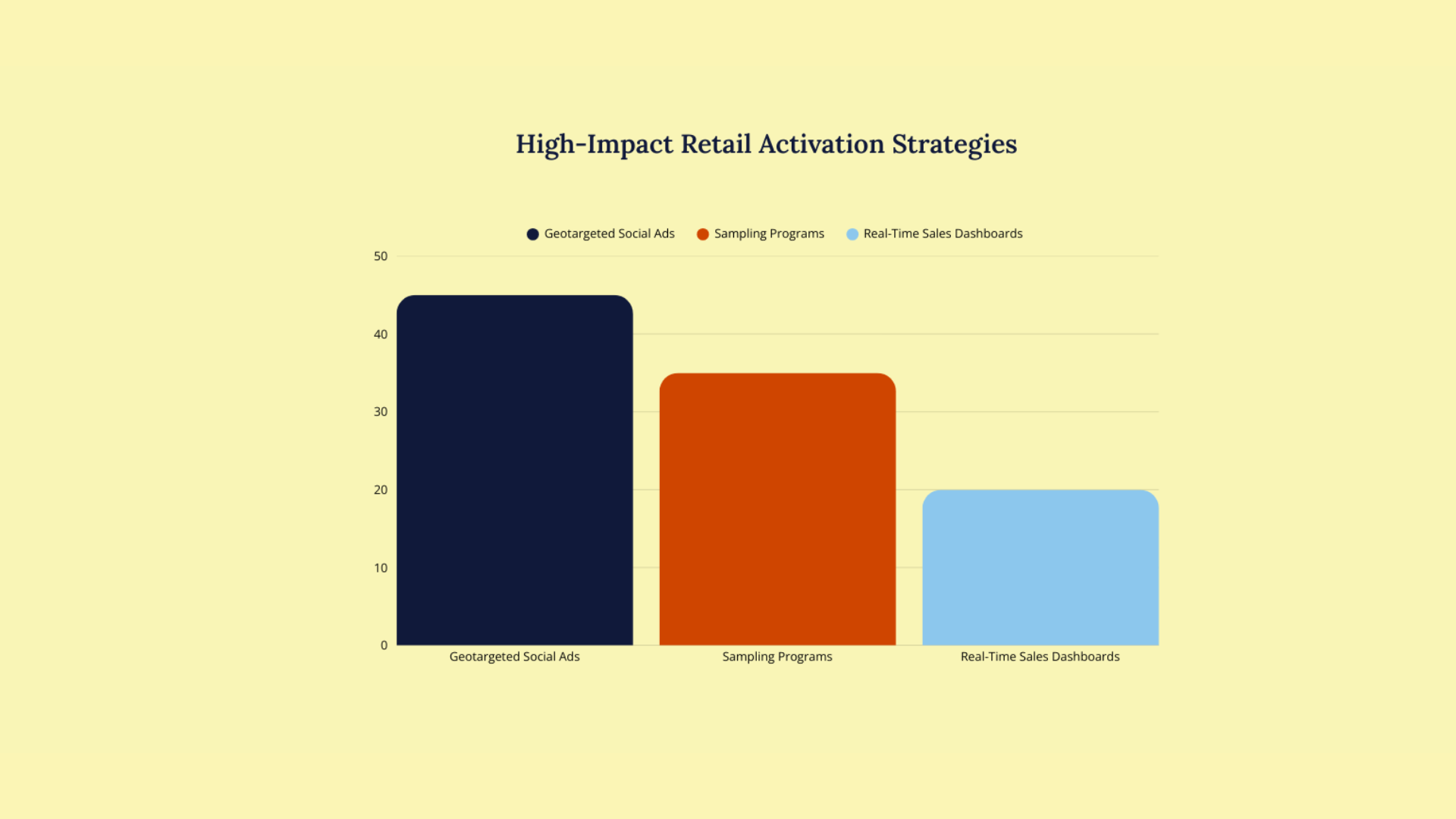
Co-market with retailers. Align with in-store teams, category managers, and media networks to drive shared objectives.
Build omnichannel visibility. Pair your physical shelf presence with digital visibility — search ads, store locators, QR experiences.
Prioritize operational excellence. Distribution gaps and out-of-stocks cost CPGs an estimated $50 billion annually in lost sales (IRI, 2024).
Shelf space is rented, not owned, and velocity pays the rent. Retail has evolved from static placement to a live, performance-driven ecosystem where marketing, analytics, and operations must work in harmony.
Digital Distribution & Storytelling
Why Content Is the New Commerce
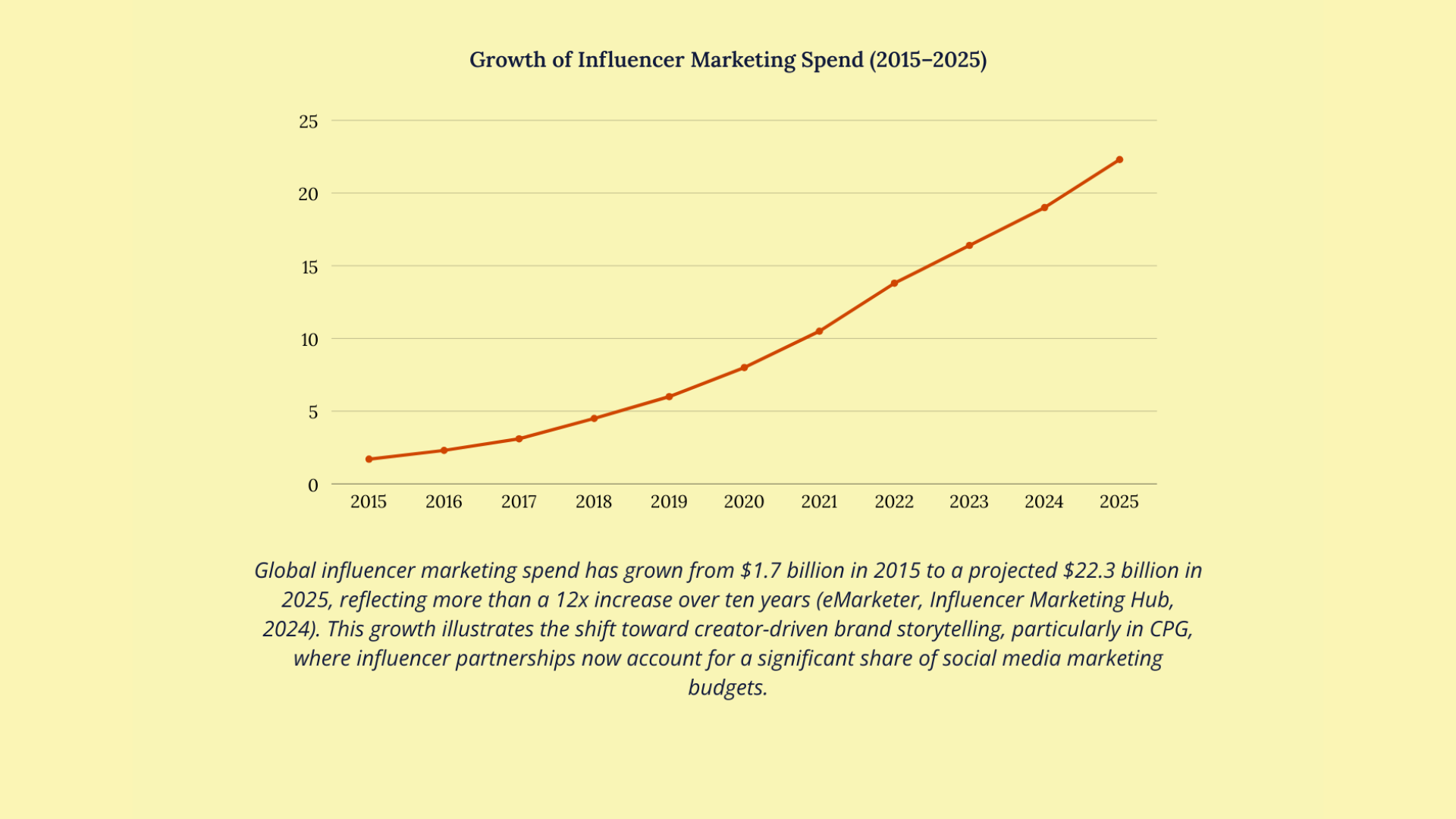
Screens are now the first shelf consumers see. Whether they’re scrolling TikTok, checking reviews on Amazon, or exploring brand-owned DTC stores, every digital touchpoint shapes purchase intent. The new reality: your content is your distribution. Having the ability to connect your product to a story that connects with consumers is vital. Your brand will stand out with buyers who are consistently flooded with content from brands.
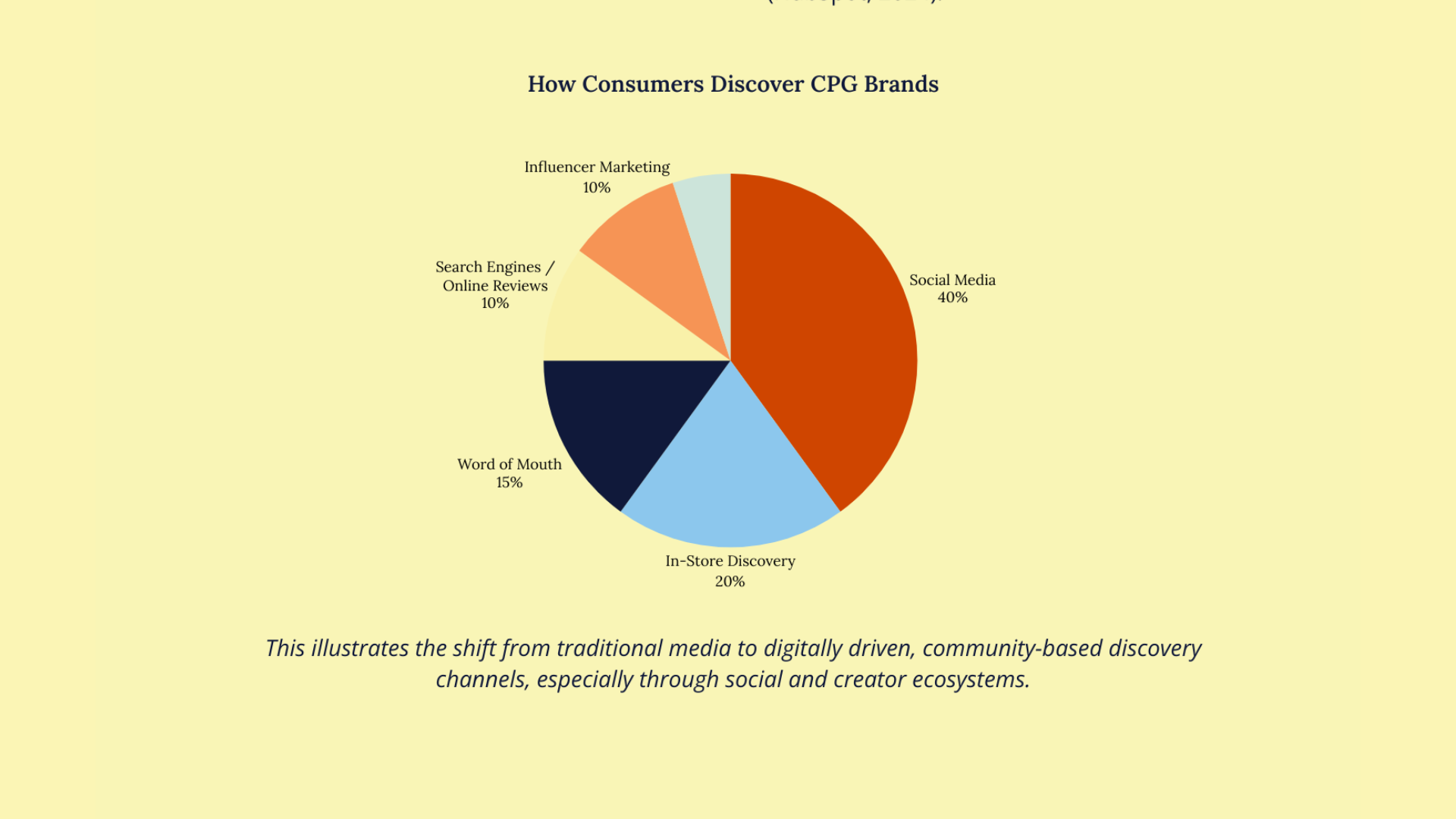
74% of consumers discover new CPG products on social media (McKinsey, 2024).
93% of online shoppers say reviews and social validation influence their final purchase decision (Gitnux, 2024).
Sensory-forward content delivers 2–3x higher engagement (WiFi Talents, 2024).
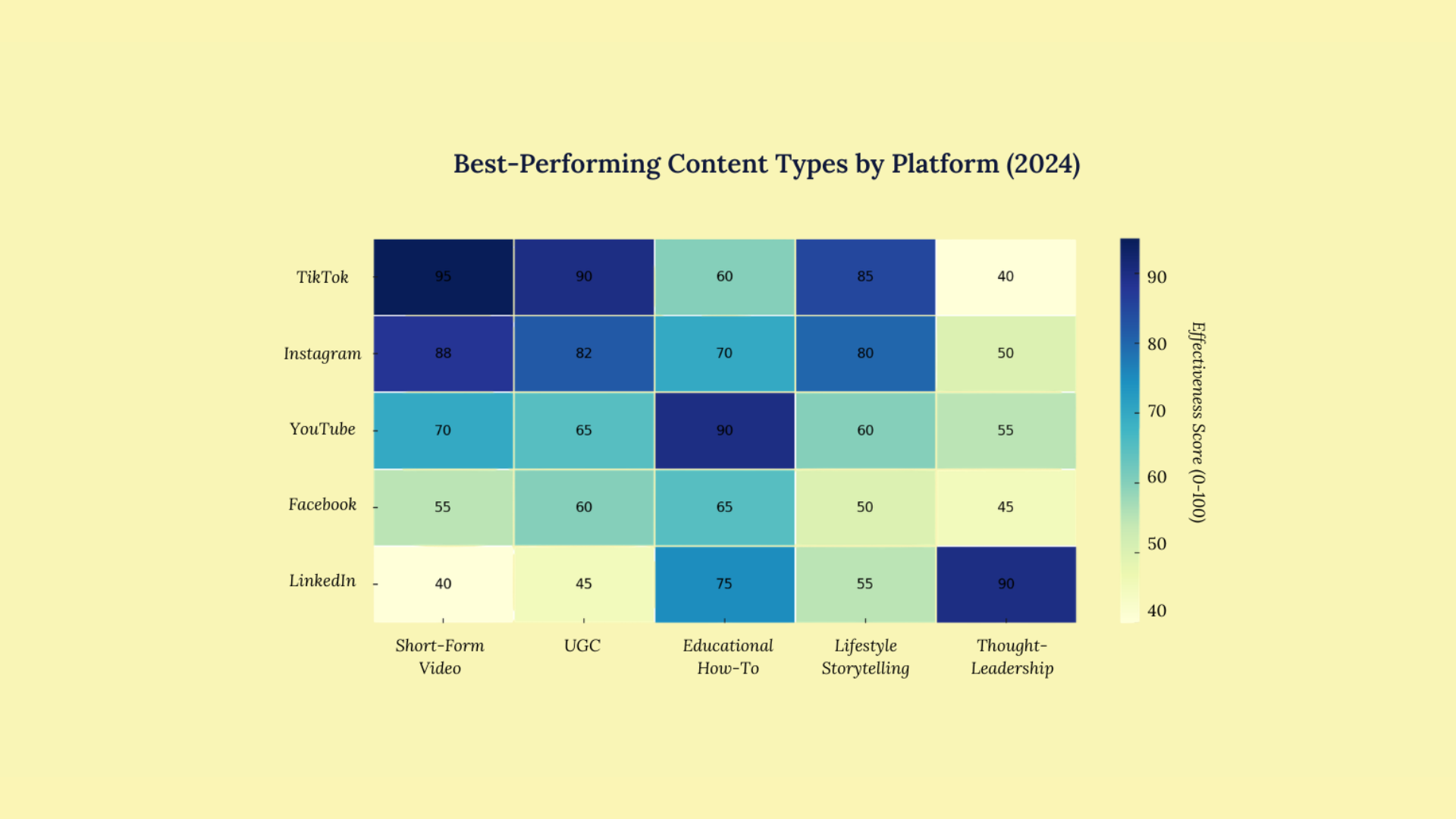
Short-form video now accounts for 80% of global internet traffic and is the most effective ad format for CPG engagement (Cisco, 2024).
Digital-first brands achieve 1.8x faster trial rates and 30% lower acquisition costs (HubSpot, 2024).
How to Master Digital Distribution
Be platform-native. Adapt to the behaviors of each channel (short, lo-fi storytelling on TikTok; polished visuals on Meta; thought leadership on LinkedIn)
Lead with emotion, not promotion. Content should educate, entertain, or evoke - never just sell.
Blend organic with paid amplification. Use storytelling to build reach, then use data to retarget effectively.
Integrate seamlessly. Ensure your website, retail partner pages, and social content tell one cohesive story.
If your brand doesn’t exist digitally, it doesn’t exist mentally. In 2026, digital storytelling isn’t a marketing channel. It’s the foundation of your brand architecture.
The CPG industry has entered the “Era of Everywhere.” Consumers move fluidly across social, retail, and cultural touchpoints, expecting consistency, authenticity, and meaning at every step.
To survive, brands must operate across all four dimensions - simultaneously and
strategically:
Culture shapes meaning. It defines why your brand exists and what it stands for.
Community creates believers. It sustains engagement and builds advocacy.
Retail converts belief into purchase. It proves your story through performance.
Digital amplifies everything. It keeps your ecosystem visible, accessible, and alive.
When executed in harmony, these four pillars create omnipresence—a state where your brand is not just noticed, but felt.