

Maximizing ROI from Digital Funnels
The Modern Performance Playbook for Scalable Growth
Consumers are anything but predictable today.
They discover brands on social, research through reviews, compare prices across marketplaces, click retargeting ads days later, and often convert after multiple touchpoints.
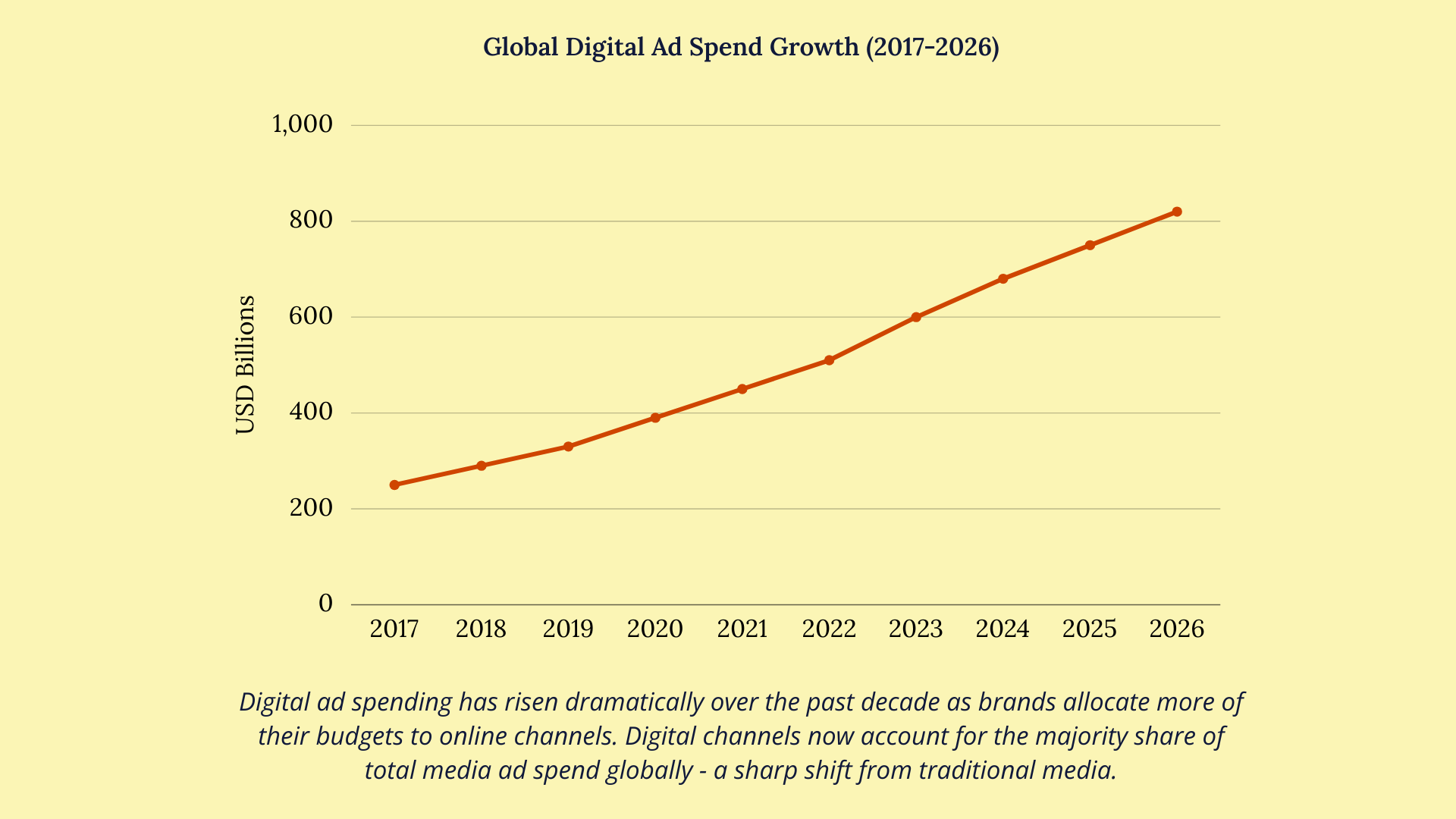
In this fragmented landscape, the brands that win aren’t those with the biggest budgets. Instead, they’re the ones with the most intentional funnels. The question is no longer “Are we running ads?” It’s “Is every stage of our funnel engineered to convert attention into measurable revenue?”
For modern brands, maximizing ROI from digital funnels requires a systematic approach. Below, we break down the four essential pillars required to drive profitable, scalable growth.
1. Traffic Quality in Upper Funnel Channels
Upper-funnel media sets the ceiling for your entire funnel’s performance. More traffic does not equal more revenue, but qualified traffic does. Many brands obsess over CPMs and impressions while ignoring intent, assuming scale alone will drive growth. But inefficient top-of-funnel strategy creates downstream friction that no amount of retargeting can fix.
High-performing funnels begin with attracting the right audience from the very first touchpoint.
Why It Matters:
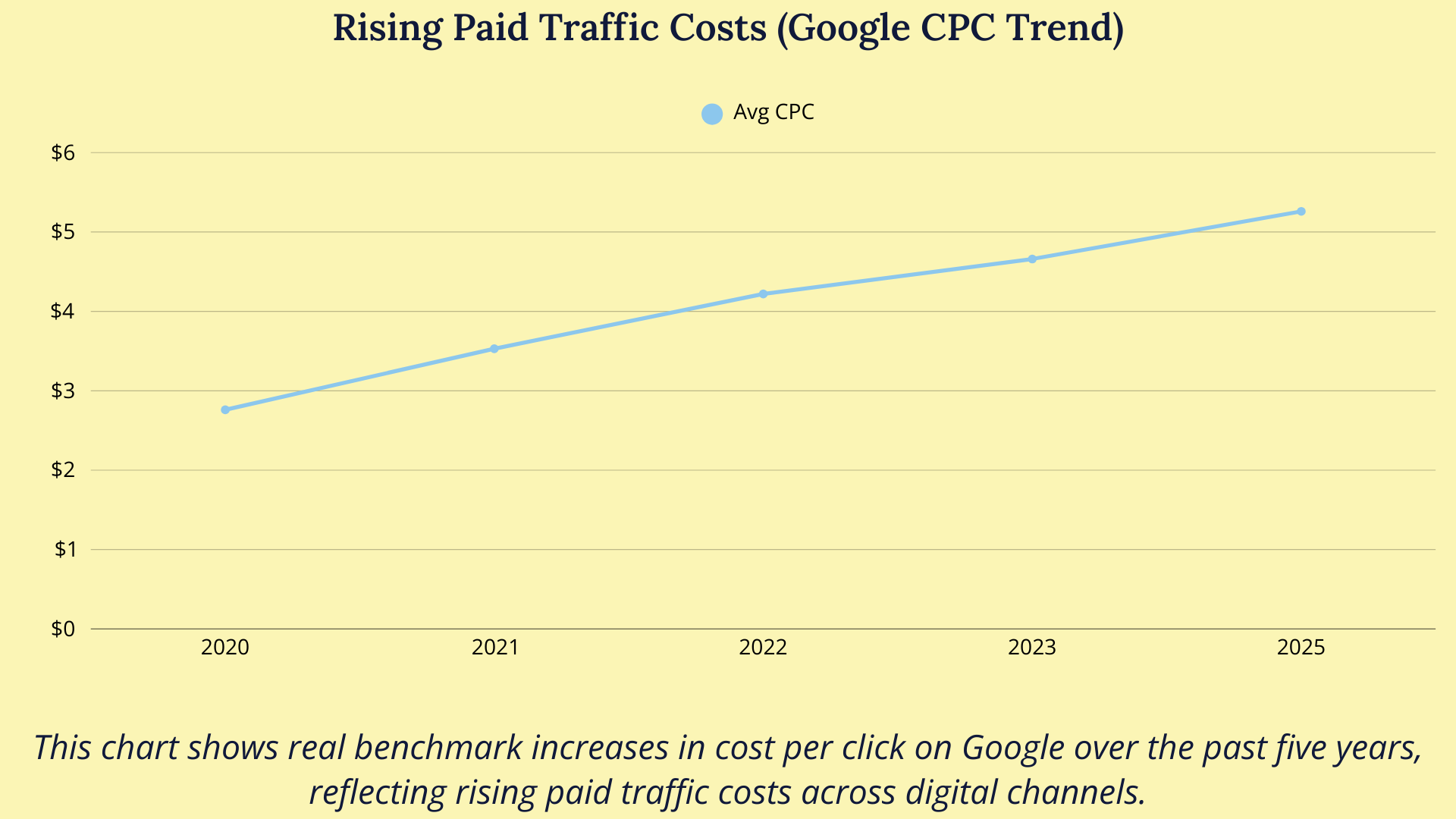
Paid traffic costs have increased 20-40% in many categories over the past 3 years.
Conversion rates from high-intent audiences are often 2-3x higher than broad cold traffic.
Poor upper-funnel targeting inflates CAC and reduces retargeting pool efficiency.
Low-quality traffic distorts performance metrics, leading to misallocated budget decisions.
What This Looks Like in Practice:
Audience segmentation based on intent, behavior, and lifecycle stage
Creative tailored to platform psychology (TikTok ≠ Meta ≠ YouTube)
Aligning ad messaging with search intent and landing page experience
Leveraging first-party data and high-signal lookalike modeling
Testing hooks and messaging before scaling spend
Top-of-funnel efficiency determines bottom-of-funnel profitability.
The takeaway: If you start with the wrong audience, optimization becomes damage control.
2. Traffic Mix & Funnel Composition
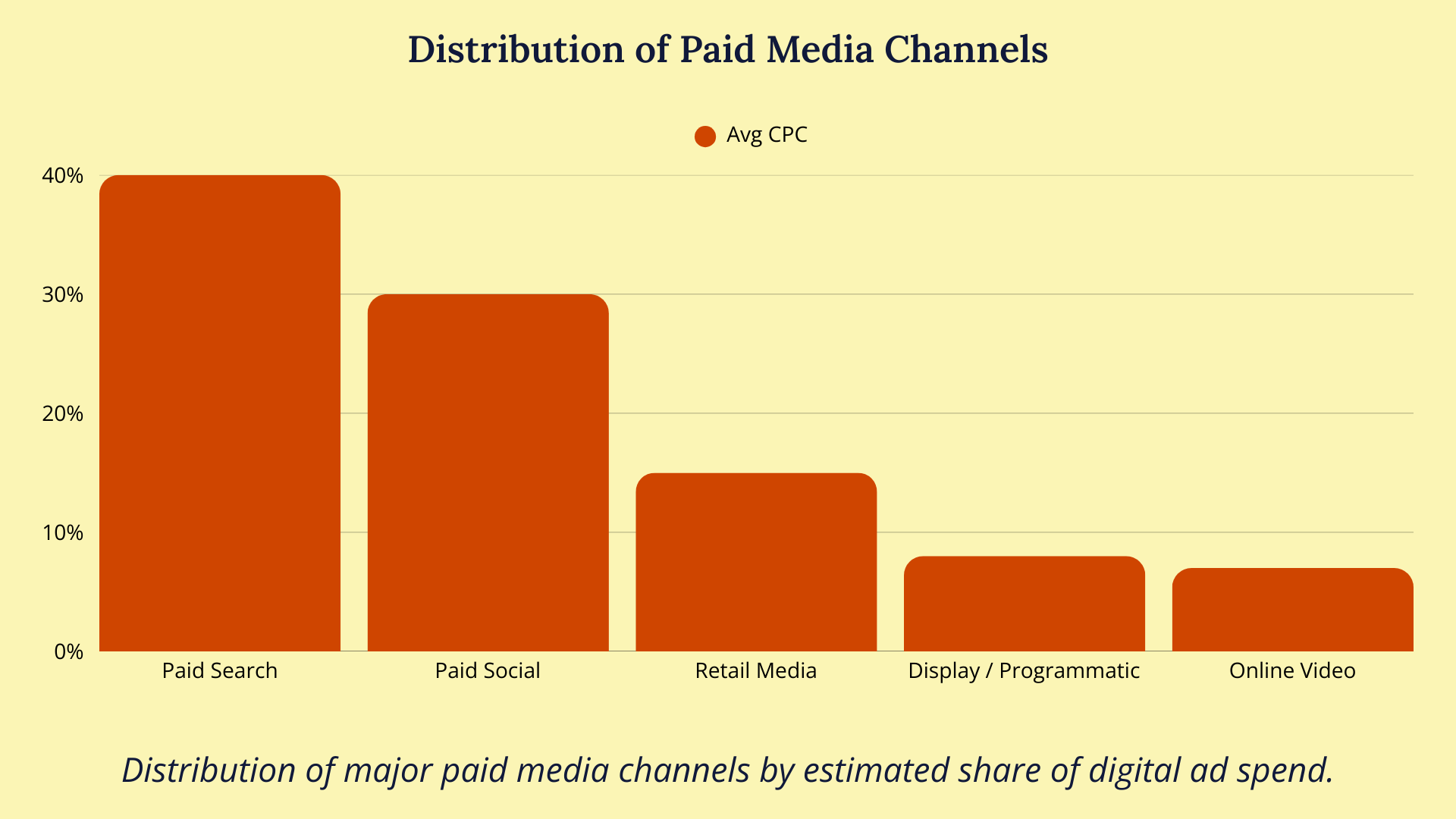
Not all traffic sources serve the same purpose and imbalance erodes ROI. A healthy digital funnel is not built on one channel. Brands that over-rely on a single source (often Meta or Google) create volatility, rising costs, and diminishing returns. Sustainable ROI requires intentional traffic composition across awareness, consideration, and conversion stages.
The mix matters as much as the volume.
Why It Matters:
Over-investment in bottom-funnel retargeting limits scale and saturates small audiences.
Excess top-funnel awareness without mid-funnel nurturing reduces conversion efficiency.
Diversified channel mix reduces platform risk and stabilizes blended CAC.
Balanced composition improves Media Efficiency Ratio (MER) over time.
What This Looks Like in Practice:
Defined budget allocation across TOF, MOF, and BOF campaigns
Strategic balance between paid social, paid search, creator partnerships, and owned channels
Retargeting pools fueled by consistent upper-funnel investment
Blended CAC and MER tracking instead of siloed platform ROAS
Quarterly budget rebalancing based on incrementality insights
A funnel is an ecosystem, and when one layer is overfed or underfunded, performance suffers.
The takeaway: Scale doesn’t come from spending more in one place. It comes from balancing the system.
3. Conversion Architecture
A funnel is only as strong as its weakest step, and driving traffic to a generic homepage is not a strategy. High-ROI funnels are built intentionally, with each click guiding the consumer toward a specific action.
Why It Matters:
A 1% increase in conversion rate can improve revenue by 10%+ depending on volume.
70-90% of users who add to cart do not complete checkout without optimization.
Clear value propositions can lift landing page conversions by 20-30%.
What This Looks Like in Practice:
Dedicated landing pages aligned to ad messaging
Clear above-the-fold value propositions
Social proof (reviews, UGC, testimonials, press)
Frictionless checkout flows
Strategic upsells and cross-sells
A/B testing headlines, CTAs, pricing displays, and page structure
Conversion rate optimization (CRO) is the highest-leverage growth lever in digital marketing.
The takeaway: Don’t buy more traffic until you optimize the consumer experience for the traffic you already have.
4. Lifecycle Monetization
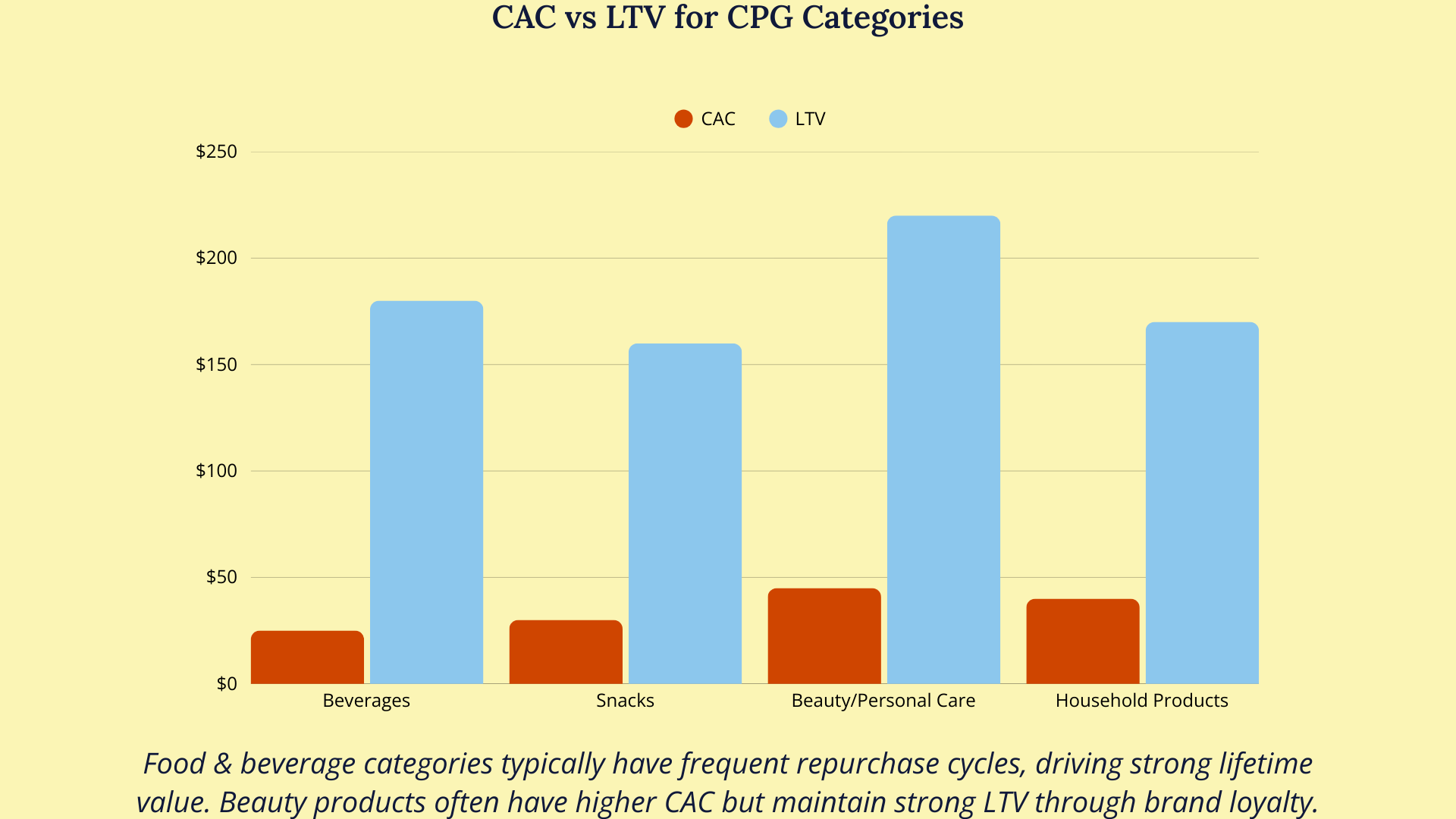
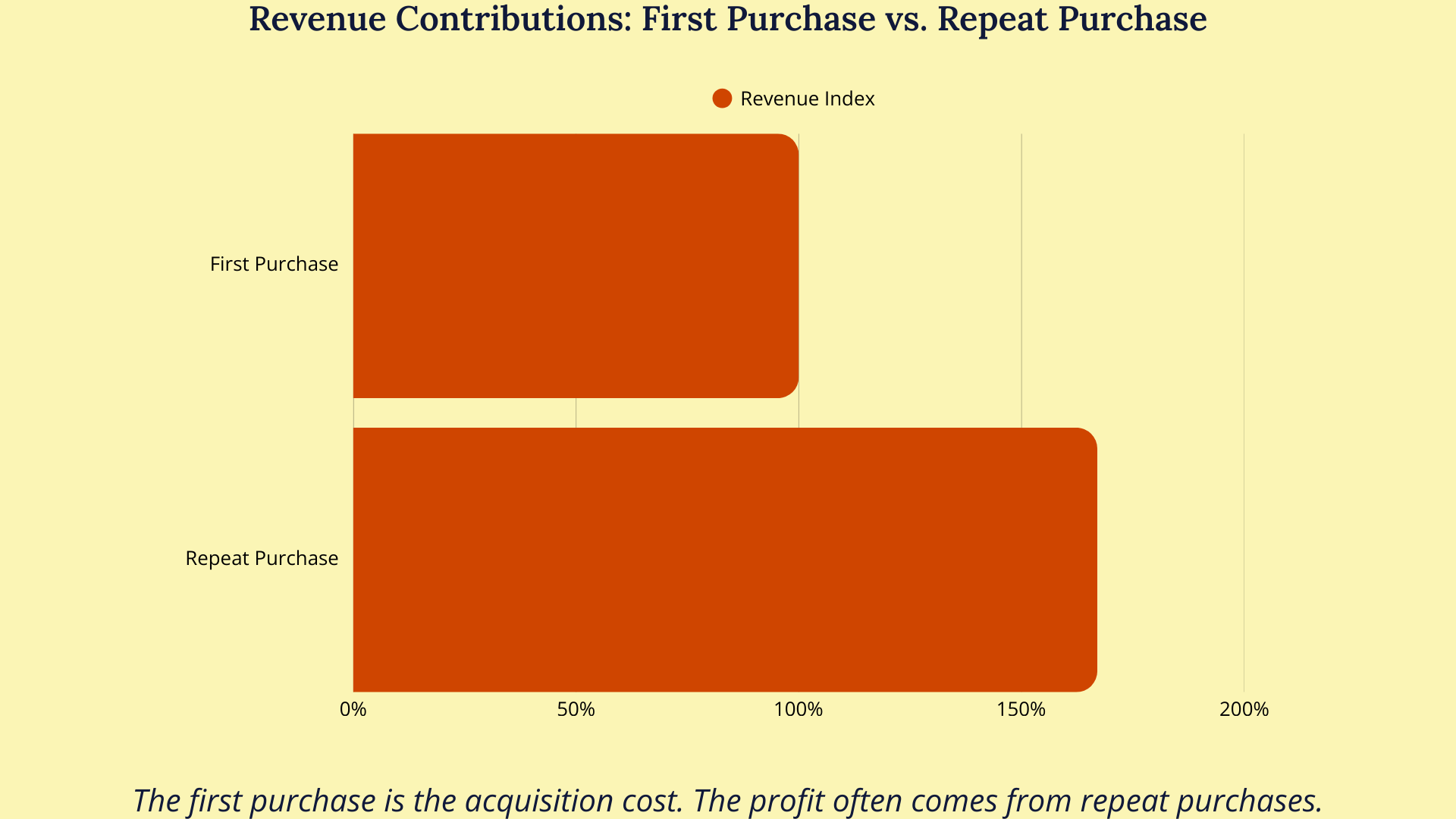
The first purchase is the beginning, not the goal. Brands that rely solely on acquisition eventually hit diminishing returns. Sustainable ROI comes from increasing lifetime value (LTV) through retention, upsells, and reactivation.
Why It Matters:
Increasing customer retention by 5% can increase profits by 25-95%.
Repeat customers spend 67% more than first-time buyers.
CAC continues to rise; LTV is the controllable variable.
What This Looks Like in Practice:
Welcome and abandoned cart flows
Post-purchase education sequences
Subscription optimization
Loyalty programs and referral incentives
SMS and email segmentation by behavior
Win-back campaigns for dormant customers
Retention marketing reduces dependency on constant new customer acquisition.
The takeaway: ROI compounds when customers return.
5. Measurement & Optimization Discipline
What gets measured gets optimized, and what gets ignored gets expensive. Many brands run campaigns without a unified measurement strategy, and without clear attribution and KPI alignment, they risk optimizing for platform performance instead of business outcomes.
Why It Matters:
Brands that implement structured testing frameworks see 30-50% stronger performance gains.
Multi-touch attribution reveals 15-25% more assisted revenue than last-click models.
Weekly optimization cycles reduce inefficient media spend and accelerate learning.
What This Looks Like in Practice:
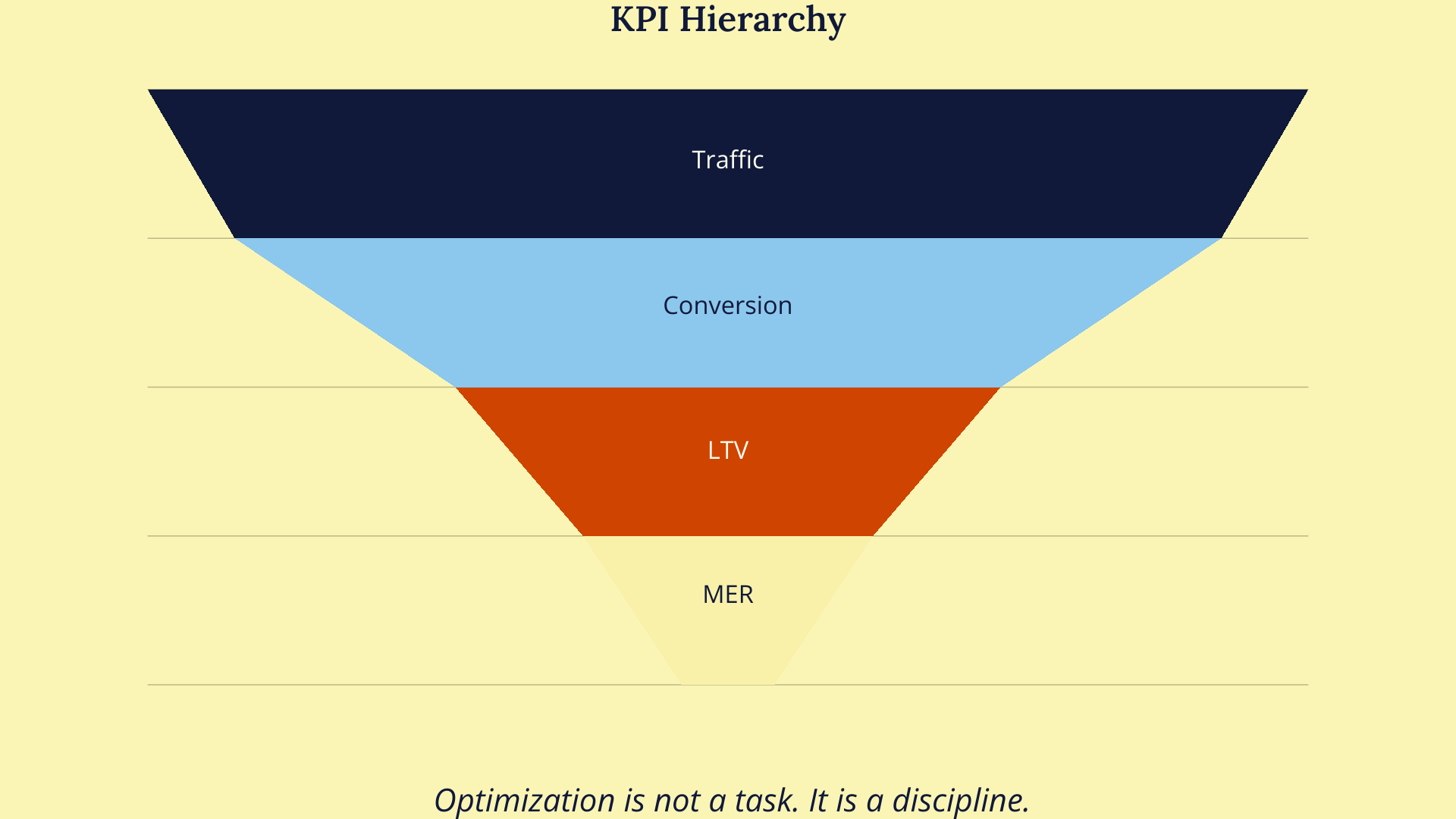
Clear KPI hierarchy (Traffic → Conversion → LTV → MER)
Media efficiency ratio (MER) monitoring
Platform-specific ROAS paired with blended CAC
Incrementality testing
Weekly test-and-learn roadmaps
Budget reallocation based on performance data
Performance marketing is not set-and-forget. It is a systematic iteration.
The takeaway: Optimization is not a task. It is a discipline.
Bringing It All Together
To maximize ROI from digital funnels, brands must operate across four interconnected dimensions:
Traffic quality determines efficiency.
Conversion architecture drives immediate revenue.
Lifecycle monetization increases lifetime value.
Measurement discipline ensures sustainable growth.
When these four pillars work together, marketing transforms from a cost center into a predictable growth engine.
High-performing brands don’t rely on hacks or isolated tactics: they build systems.
At Indie Consulting, we help brands design, optimize, and scale digital ecosystems that drive measurable business outcomes. We don’t just launch campaigns; instead, we architect growth engines designed for profitability.
Because in modern marketing, attention is rented, but ROI is engineered.